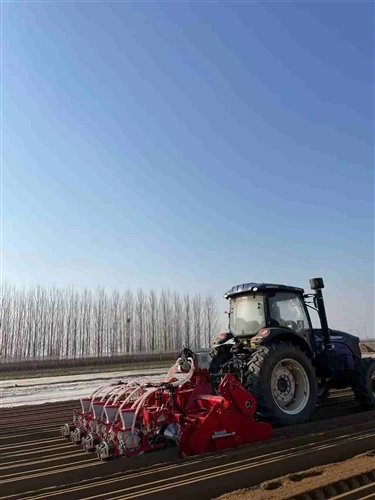
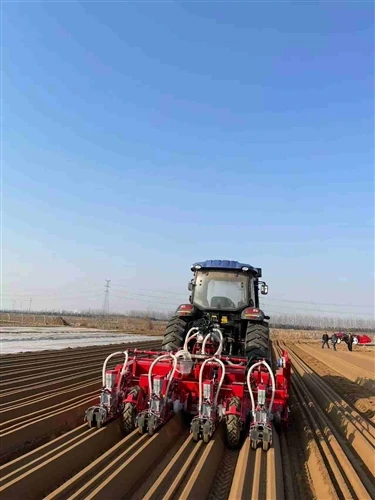
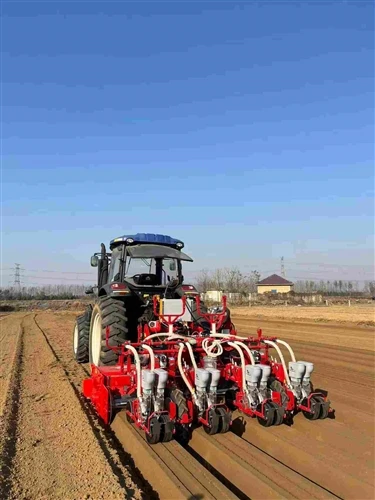
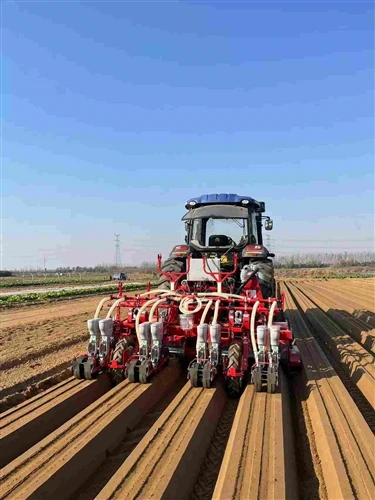
Choosing a suitable air-suction vegetable seeder is an important decision for farms that want to improve planting efficiency and reduce manual labor. Different crops, seeds, field conditions, and production goals require different machine configurations. Before purchasing a vegetable seeder, farmers should evaluate several key factors.
The first consideration is the type of crop being planted. Vegetable seeds can vary significantly in size, shape, weight, and surface characteristics. Onions, carrots, lettuce, beets, and coriander may require different seed-metering configurations. Therefore, farmers should select equipment that can be adapted to the specific crops they plan to grow.


The second factor is the desired number of seeds per hole. Some crops may require one seed per hole, while other planting systems may use multiple seeds. An air-suction vegetable seeder can be configured according to these requirements, but the seed plate and vacuum settings need to match the application.
Row spacing and plant spacing are also important. Before selecting a machine, farmers should determine the required distance between rows and between individual seeds. The machine should then be configured to match the farm's cultivation system.
Seed characteristics should also be carefully considered. If seeds are coated, processed, or have an irregular shape, the seeding system may require different suction settings or a specialized seed plate. Testing the machine with the actual seed to be planted is therefore highly recommended before large-scale operation.


Machine capacity is another important factor. Small farms may prioritize compact equipment and simple operation, while large commercial farms may require multiple-row configurations to increase working efficiency. A machine with more rows can cover a larger area in each pass, potentially reducing total planting time.
Field conditions should not be overlooked. Soil preparation, moisture, surface leveling, and tractor speed can all influence sowing performance. Even a high-precision machine requires suitable field conditions to achieve stable results.
Farmers should also consider maintenance and after-sales support. A seeder is an agricultural production tool that may be used repeatedly during planting seasons. Easy access to wearing parts, seed plates, vacuum components, and technical assistance can help reduce downtime.
Qingdao Dashun Jingfeng Industry & Trade Co., Ltd. provides air-suction vegetable seeders designed for different vegetable planting applications. The company can offer different machine configurations according to crop type, seed characteristics, row requirements, and customer preferences.
A good purchasing decision should therefore focus on more than machine price alone. Farmers should consider precision, compatibility with their seeds, working capacity, ease of operation, maintenance requirements, and long-term usability.

The right air-suction vegetable seeder can help farms establish a more consistent planting pattern while reducing repetitive manual work. By carefully matching the machine configuration to the crop and field conditions, growers can make better use of precision seeding technology and improve the efficiency of their vegetable production operations.