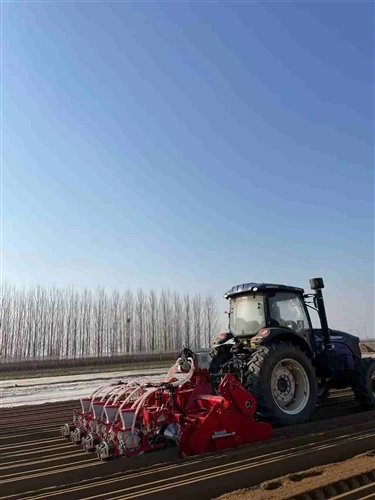
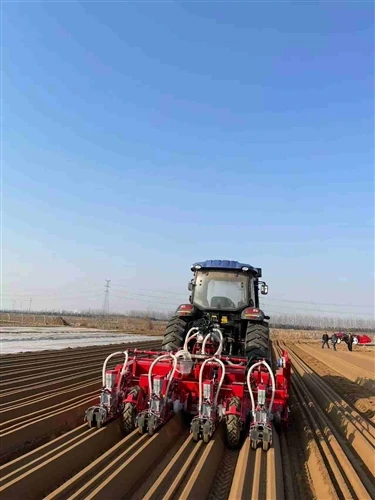
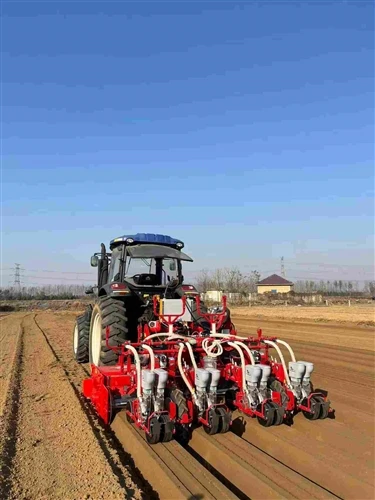
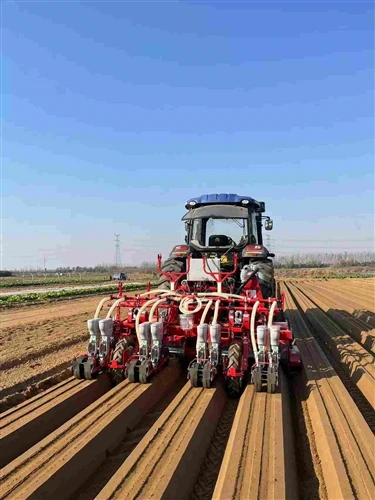
Growers who have tried planting onions, carrots, or lettuce with general-purpose equipment know the frustration. The seeds are tiny, irregular, and easily damaged. Broadcasting wastes expensive seed, while manual spot sowing is slow and inconsistent. This is exactly the problem that an air-suction vegetable seeder was designed to solve.
The challenge begins with seed size. Onion seeds are among the smallest in commercial vegetable production. A single kilogram can contain hundreds of thousands of seeds. Traditional mechanical seeders cannot separate these seeds reliably, often dropping clusters or skipping holes entirely. A pneumatic onion planter uses vacuum suction to pick up individual seeds and place them at precise intervals, achieving a single-seed placement rate exceeding 97 percent.


Carrot seeds present a different difficulty. They are light, rough-surfaced, and covered with tiny hairs that cause them to cling together. Mechanical metering systems struggle to singulate them consistently. An air-suction carrot planter uses a seed plate with appropriately sized micro-pores and carefully controlled vacuum pressure to separate each seed and release it cleanly into the furrow.
Lettuce, beets, and Chinese cabbage have their own characteristics. Some seeds are coated for better flowability, while others are raw and irregular. A vegetable seeder that accepts interchangeable seed plates and adjustable vacuum settings offers the flexibility to handle all of these crops with a single machine.


The economic argument is compelling. Hybrid vegetable seeds are expensive, and many are imported. Every wasted seed is a direct loss. An air-suction vegetable seeder that places one seed per hole eliminates most of this waste. For a farm planting dozens of hectares of onions or carrots, the seed savings alone can cover the cost of the machine within a few seasons.
Labor is the second major consideration. Small-seeded vegetables traditionally require thinning and transplanting after broadcasting, which is time-consuming and hard to organize as labor supplies tighten. A pneumatic vegetable planter that places seeds at the correct spacing eliminates most of this follow-up work. The crop emerges uniformly and requires less manual intervention throughout the season.


The technology is well established. Negative-pressure air-suction metering creates a vacuum chamber within the seed metering unit. Seeds are drawn onto the micro-pores of a rotating seed disc and transported to the release point, where a mechanism separates them and places them into the soil. The vacuum-based pickup process also minimizes mechanical damage to the seeds, preserving their germination potential.
For growers who have struggled with small-seed vegetables in the past, the message is clear. Modern air-suction vegetable seeders have solved the problems that once made these crops difficult and unprofitable. Whether planting onions, carrots, lettuce, or other small-seeded vegetables, the right vegetable seeder can turn a frustrating task into an efficient and profitable operation.