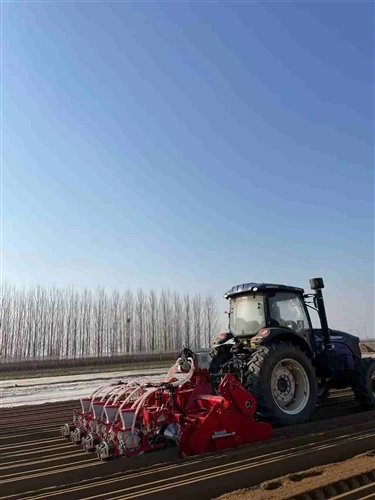
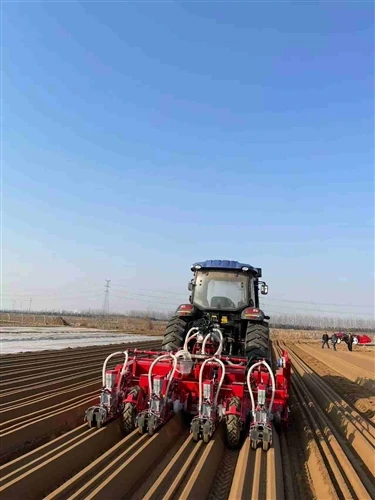
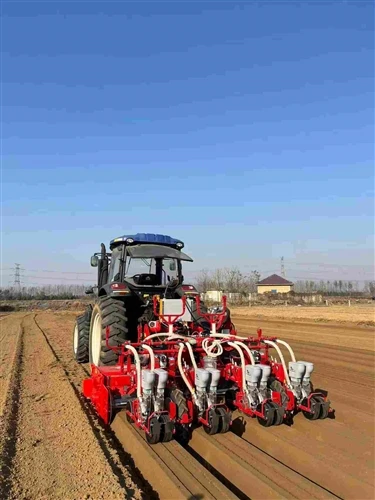
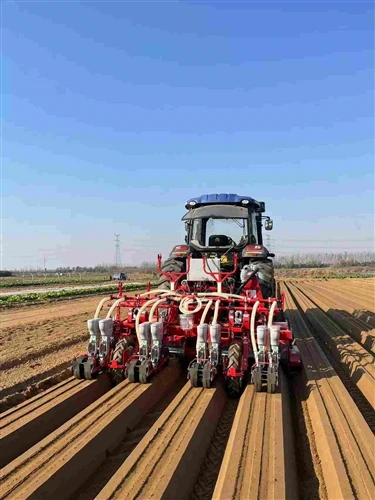
One of the most important adjustments on an air-suction vegetable seeder is vacuum pressure. This single setting determines whether seeds are picked up correctly, whether multiple seeds attach to one hole, and whether seeds are released cleanly at the drop point. Understanding how vacuum pressure works helps growers get the best performance from their equipment.
The basic principle is simple. A fan creates negative pressure inside the seed metering unit, forming a vacuum chamber. Seeds are drawn onto the micro-pores of a rotating seed disc. The strength of the vacuum determines how firmly the seeds are held. If the vacuum is too strong, multiple seeds may attach to a single pore, causing double or triple seeding. If the vacuum is too weak, seeds may not be picked up at all, causing skipped holes.
The correct vacuum pressure depends on several factors. The first is seed size and weight. Larger, heavier seeds require stronger suction to hold them against the disc as it rotates. Smaller, lighter seeds require less suction. A pneumatic onion planter handling tiny onion seeds needs a very different vacuum setting than an air-suction carrot planter handling larger carrot seeds.


The second factor is seed shape and surface texture. Irregular seeds may require higher suction to ensure reliable pickup. Smooth, round seeds may require less. Coated seeds behave differently from raw seeds because the coating changes both size and surface properties.
The third factor is operating speed. At higher travel speeds, the disc rotates faster, and seeds have less time to attach to the pores. This may require slightly higher vacuum pressure to maintain reliable pickup. However, increasing pressure to compensate for speed can cause multiple seeds to attach, so the relationship between speed and pressure must be carefully balanced.


The fourth factor is seed plate design. Plates with smaller pores require different pressure settings than plates with larger pores. The thickness of the plate and the surface finish also influence how much vacuum is needed.
Modern air-suction vegetable seeders make it easy to adjust vacuum pressure. Most machines have a control valve or regulator that allows the operator to fine-tune the setting in the field. Some higher-end models include digital displays that show the exact pressure level, making adjustments more precise and repeatable.
The practical recommendation is to test before planting. Before large-scale operation, run a small quantity of the actual seed through the vegetable seeder and observe the pickup and release process. Adjust the vacuum pressure until each pore holds exactly one seed and releases it cleanly. Check the result at the actual operating speed you plan to use in the field.


For farmers planning to purchase an air-suction vegetable seeder, providing accurate information about the seed is very important. Sharing seed size, shape, coating information, and planting requirements with the equipment supplier can help determine a more suitable configuration. In practical farming, the machine and the seed should be considered as one system.
Proper vacuum adjustment is one of the keys to getting the best performance from modern air-suction seeding equipment. Whether using a pneumatic onion planter, an air-suction carrot planter, or a multi-crop vegetable seeder, understanding vacuum pressure helps growers achieve consistent, high-quality results.