I. System Architecture
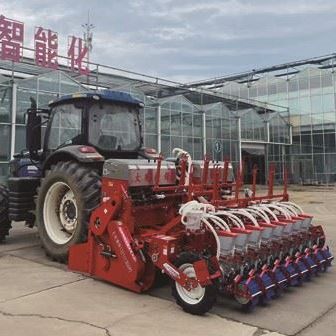
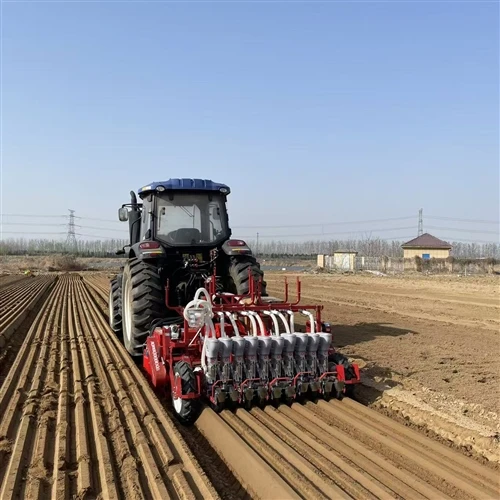
A pneumatic vegetable seed drill integrates several subsystems:
Airflow system: A fan generates negative pressure (800–1,500 m³/h airflow) distributed evenly across all rows via manifold regulators.
Metering unit: Each row has a seed disc with precision holes, a vacuum chamber, and a hopper with agitator to prevent seed bridging.
Furrow opener: Double-disc or hoe-type openers create consistent furrows, with gauge wheels maintaining depth (typically 10–30 mm for vegetables).
Covering system: Chains or discs pull soil over seeds, followed by press wheels for good seed-to-soil contact without excessive compaction.


II. Operational Best Practices
Seed Preparation
Size and grade seeds to match disc holes; oversized seeds don't seat properly, undersized ones cause multiples.
Coated seeds require vacuum adjustment for their larger effective diameter and added weight.
Anti-static treatment helps small, lightweight seeds avoid clinging to components.
Machine Setup
Calibrate vacuum pressure for each seed type-too low causes misses, too high causes multiples or damage.
Select disc with appropriate hole count (denser spacing) and hole size (matches seed diameter).
Verify drop point timing to synchronize disc rotation with ground speed.
Field Conditions
Ideal moisture: friable-moist enough to hold shape, dry enough to flow freely.
Manage crop residue to prevent opener clogging and poor seed-to-soil contact.
Ensure ridge dimensions fall within machine's adjustable range (150–250 mm height, 250–400 mm width).

III. Pneumatic vs. Mechanical Comparison
Parameter Pneumatic Mechanical
Single-seed rate ≥99% 85–95%
Miss-seeding rate ≤1% 3–8%
Seed damage <0.5% 2–5%
Max speed 10–16 km/h 5–8 km/h
Seed size range 0.5–12mm (one disc change) Limited; requires different units
IV. Emerging Technologies
Row-by-row electric drive: Independent motors enable individual row shut-off and variable-rate adjustment.
Vision-based monitoring: Cameras with machine vision verify seed placement and depth in real time.
Variable Rate Seeding: Integrates with soil maps to adjust rates by zone-higher in high-potential areas, lower in marginal ones.
Autonomous operation: GPS-guided drills with obstacle detection are in early testing stages.
V. Troubleshooting & Maintenance
Symptom Likely Cause Remedy
Missed seeds Vacuum too low; blocked holes Increase fan speed; clean disc
Multiples Vacuum too high; wrong disc Reduce vacuum; use smaller holes
Uneven emergence Inconsistent depth Adjust gauge wheels; check covering
Row variation Uneven airflow Check manifold; inspect seals
Maintenance schedule:
Daily: Clean fan intake; check seals; lubricate bearings.
Weekly: Inspect hoses and belts; calibrate monitors.
Seasonal: Replace worn discs; service fan; overhaul metering units.


VI. Summary
Pneumatic vegetable seed drills offer superior precision, efficiency, and crop adaptability compared to mechanical alternatives. While initial investment is higher, the benefits-reduced seed waste, faster speeds, and lower replanting costs-deliver strong returns for commercial growers. As automation and digitalization advance, these drills will continue evolving as core tools for data-driven vegetable production.