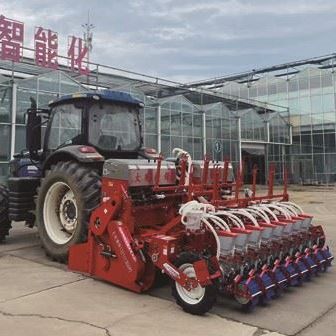
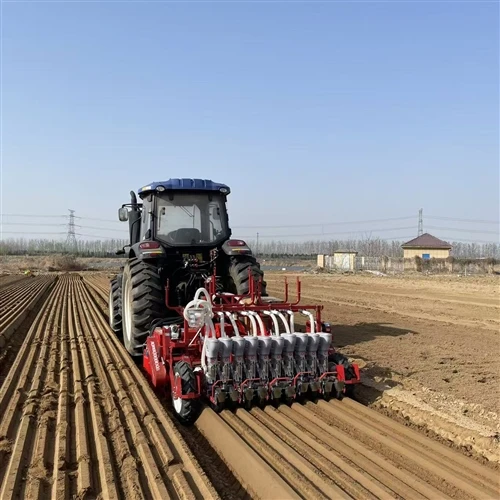
Vegetable farms operate in widely different conditions. A farm in the cool, moist climate of northern Europe faces different challenges from a farm in the hot, dry conditions of Central Asia. Soil type, moisture levels, temperature, and field size all vary. Air-suction vegetable seeders are designed to adapt to these differences, but growers need to understand how to adjust their machines for local conditions.
The first variable is soil type. Sandy soils drain quickly and warm early in the season, but they can be loose and prone to uneven furrow formation. Clay soils hold moisture but can form clods and compacted layers. A pneumatic onion planter operating in sandy soil may need different depth settings than one operating in clay. The furrow opener must be adjusted to create a clean seedbed in the specific soil type.


The second variable is moisture. Seeds need adequate moisture to germinate, but too much moisture can cause problems. In wet conditions, the furrow opener may smear the soil and create a hard crust that prevents emergence. An air-suction carrot planter operating in wet soil may need shallower depth settings and lighter soil pressure to avoid compaction. Growers should wait for appropriate soil moisture before planting.
The third variable is temperature. Cold soils slow germination and can increase the risk of seedling diseases. In cool climates, growers may plant shallower to take advantage of warmer surface temperatures. A vegetable seeder with adjustable depth control allows the operator to match planting depth to soil temperature conditions.
The fourth variable is field size and shape. Large, rectangular fields are well suited to wide multi-row machines. Smaller, irregular fields may require more maneuverable equipment. A pneumatic vegetable planter with a narrower working width may be more practical for fields with obstacles or irregular boundaries. Growers should match machine capacity to field size.


The fifth variable is residue and surface conditions. Fields with high residue levels require furrow openers that can cut through residue without blocking. Fields with uneven surfaces require machines that can maintain consistent depth. An air-suction vegetable seeder with a well-designed furrow opener and depth control system can handle a range of surface conditions.
The sixth variable is altitude and climate. High-altitude fields may have lower air pressure, which can affect vacuum system performance. Growers operating at high altitude should test their machine's vacuum pressure carefully and adjust as needed. A vegetable seeder that performs well at sea level may need different settings at 2,000 meters.

For farmers using an air-suction onion planter or air-suction carrot planter across different regions, the key is to test and adjust. Before planting a new field, run a small test strip and observe seed placement, depth, and emergence. Adjust the machine settings based on what you observe. This practical approach allows growers to adapt their air-suction vegetable seeder to local conditions and achieve consistent results regardless of where they farm.
Modern air-suction vegetable seeders are designed with adjustable settings that allow them to perform well across a wide range of conditions. By understanding how soil, moisture, temperature, field size, residue, and altitude affect performance, growers can make the adjustments needed to get the best results from their equipment.