I. Working Principle
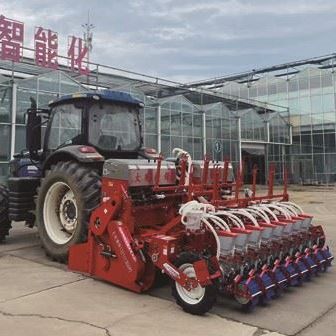
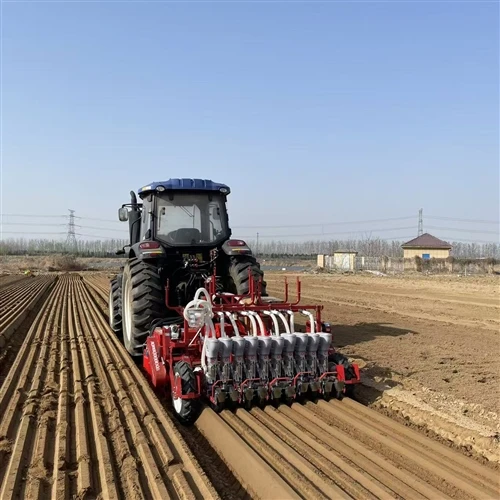
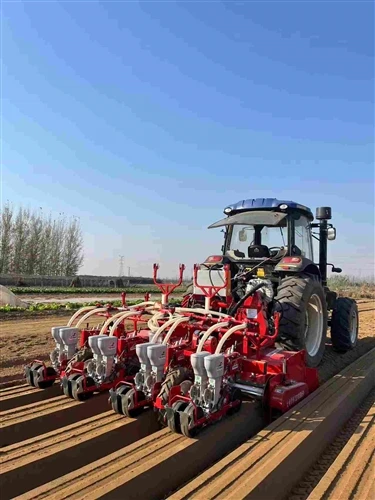
Pneumatic precision seed drills operate on negative pressure adsorption. A fan generates stable vacuum that holds seeds against precision-machined holes on a rotating seed disc. At the release point, the vacuum is cut off, and seeds fall by gravity into the furrow. This non-contact method eliminates the high miss-seeding, double seeding, and seed damage common with mechanical metering systems.
II. Key Technical Advantages
1. High Precision
Pneumatic metering achieves a single-seed rate of 99% or higher, with miss-seeding below 1%, even at operating speeds up to 16 km/h-ensuring both accuracy and productivity.
2. Broad Seed Adaptability
By simply changing seed discs, one machine handles seeds from 0.5 mm (cabbage, lettuce) to 12 mm (pumpkin, beans), delivering strong return on investment for growers with diverse crops.
3. Minimal Seed Damage
The gentle vacuum pickup protects coated and high-value hybrid seeds, reducing seed costs and improving germination outcomes.
4. Intelligent Electric Drive
Modern pneumatic drills use electric drive with GPS/Beidou synchronization, enabling real-time speed matching, digital parameter adjustment (spacing, depth), and variable-rate seeding for precision farming.

III. Industry Standards
Chinese standards JB/T 14648-2023 and NY/T 1762-2009 specify performance benchmarks and test methods for pneumatic metering devices, covering single-seed rate, miss-seeding rate, and seed damage-providing a unified quality framework for manufacturers and users.
IV. Market Trends
1. Rapid Market Growth
Domestic sales reached ~30,000 units (Jan–Apr 2026), with pneumatic models in short supply. The market is projected to reach USD 897 million by 2032 (CAGR ~8.7%), driven by rising labor costs, mechanization policies, and precision farming adoption.
2. Drive System Upgrades
Ground-wheel drive-prone to slippage on wet or uneven surfaces-is being replaced by hydraulic and electric drives, which deliver consistent power independent of ground conditions and enable centimeter-level seeding accuracy.
3. Smart and Digital Integration
New-generation seed drills incorporate real-time miss-seeding monitoring, data logging, remote parameter adjustment via cloud platforms, and IoT connectivity for full digital traceability from sowing to harvest.

V. Vegetable-Specific Requirements
Vegetable seeds vary widely in size, each placing distinct demands on the drill:
Seed Type Typical Crops Diameter Key Requirements
Micro Cabbage, lettuce 0.5–1.5mm Fine vacuum control; micron-level hole precision
Small Tomato, pepper 1.5–3.0mm Anti-static discs to prevent adhesion
Medium Carrot, onion 3.0–6.0mm Clog-resistant holes; stable airflow
Large Pumpkin, beans 6.0–12.0mm Higher suction; coordinated release depth
A high-performance vegetable pneumatic drill must therefore feature: interchangeable seed discs, multi-stage vacuum adjustment, anti-static materials, contour-following openers for consistent depth, and active weeding ahead of each row.
VI. Conclusion
Pneumatic vegetable seed drills have become essential for modern vegetable production, delivering precision, efficiency, and adaptability. With ongoing advances in electric drive, smart monitoring, and digital connectivity, they are evolving from simple seeding implements into intelligent platforms that support data-driven, fully mechanized vegetable farming-offering growers improved quality, reduced costs, and greater operational efficiency.