

The key to an air-suction seeder lies in a mechanism that appears simple yet is highly ingenious. A fan creates negative pressure inside the seeding chamber, causing individual seeds to be drawn onto the slots of the rotating seed-dispensing disc. Each slot is precisely sized to hold only one seed; when the disc rotates to the seeding position, a seed pusher gently nudges the seed, causing it to fall accurately into the pre-cut seed furrow. This method ensures that only one seed is deposited in each planting hole-a level of consistency that traditional seeders struggle to achieve.
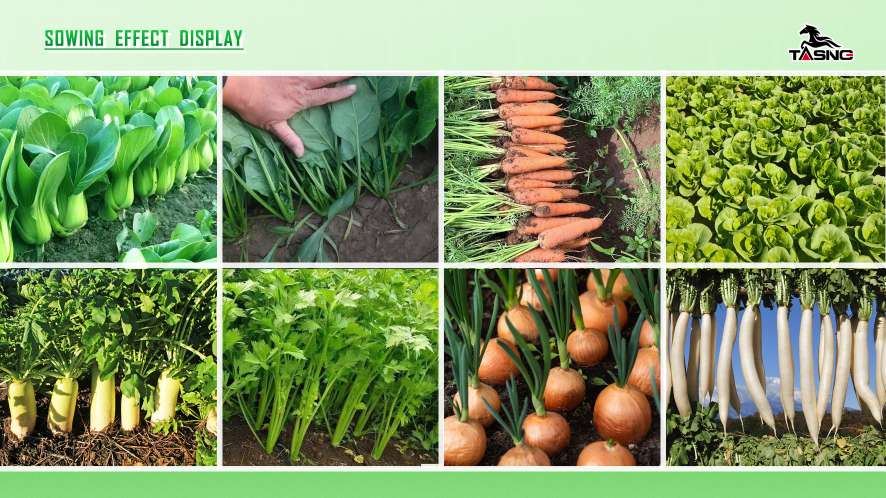
The replaceable design of the seed-dispensing disc also gives the equipment exceptional adaptability. By swapping out discs with different hole sizes and configurations, a single machine can sow a wide variety of seeds, ranging from the tiny Chinese cabbage seeds to the larger spinach seeds. For farms that rotate multiple crops within a single growing season, this versatility translates to greater economic viability.
The operational advantages of pneumatic seeding technology extend beyond seed savings. Traditional seeding methods often require multiple steps-such as tilling, ridge formation, laying irrigation lines, and seeding-to be completed separately. Modern pneumatic seeders integrate these steps, combining soil preparation, ridge formation, drip tape installation, furrowing, seeding, and rolling into a single continuous operation.


This integration directly results in reduced fuel consumption, less soil disturbance caused by repeated compaction, and a shorter optimal planting window-which is particularly critical in regions with variable and unpredictable weather. Seed placement uniformity is another significant advantage. When seeds are planted at consistent depths and spacings, field emergence tends to be synchronized. This uniform growth pattern simplifies subsequent management tasks, including fertilization, pest and disease control, and mechanical cultivation. Growers using vacuum seeding systems often find that their crops are more vigorous and yield higher marketable yields compared to fields treated with traditional equipment.
Although vacuum seeders were initially developed primarily for large commercial farms, this technology has gradually become more widespread on medium-sized farms. Manufacturers now offer configurations suitable for various scales, ranging from compact two-row models designed for specialty vegetable production to sixteen-row machines capable of covering large tracts of farmland.
 The investment in such equipment is often recouped solely through savings on seed costs, as mechanical seeders typically waste large quantities of expensive hybrid seeds. Maintenance requirements differ significantly from those of traditional systems. Pneumatic components require regular inspection for debris buildup and to ensure seals are intact; however, because these machines eliminate complex gears and precision moving parts, the probability of breakdowns during peak planting seasons is relatively low. Dealers typically stock wear-and-tear parts-such as seed discs, seals, and hoses-to ensure replacement parts are readily available.
Pneumatic vegetable seeders vividly demonstrate how thoughtful engineering design addresses fundamental challenges in the agricultural sector. By enabling precise single-seed planting, integrating field operations, and incorporating digital monitoring tools, this equipment helps growers achieve better yields with fewer inputs. As climate pressures intensify and production demands rise, such efficiency-driven technologies will become increasingly important for sustainable vegetable production worldwide. The ongoing refinement of vacuum seeding systems also enables farmers of all sizes to benefit from the precision required by modern agriculture.


