

The next chapter in precision vegetable planting is not about the metering system alone. It is about what happens when air-suction vegetable seeders begin to communicate with the operator, the tractor, and the farm management system in real time. Smart monitoring is rapidly becoming a standard feature on higher-end models, and it is changing how growers think about planting.
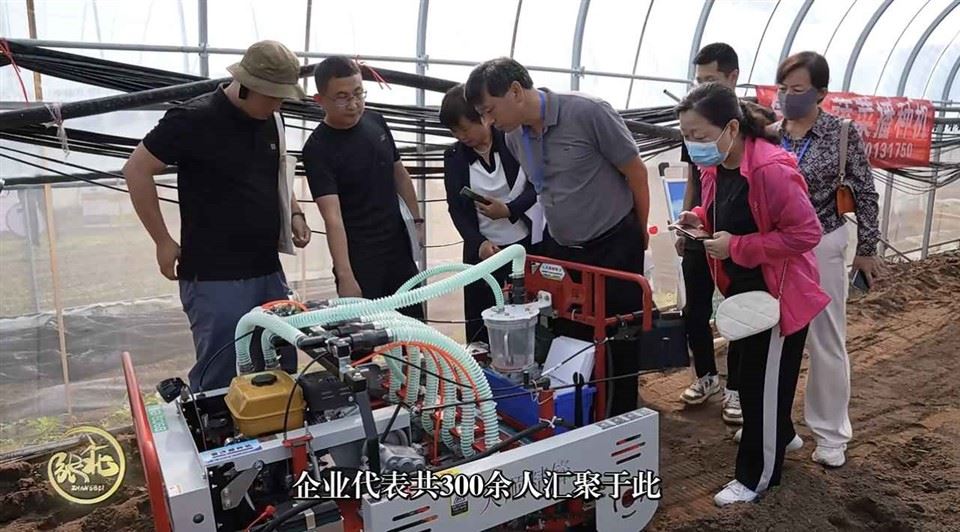
At a demonstration held in Laixi, Qingdao, in June 2025, an air-suction-type precision vegetable seeder equipped with a real-time monitoring system was showcased. Operators could observe seeding conditions directly from the tractor cab, including seed flow, hole blockage, and hopper levels. This kind of visibility was impossible with traditional mechanical seeders, where problems were often discovered only after the field had already been planted.


The practical benefits are significant. If a suction hole becomes blocked, the monitoring system alerts the operator immediately, allowing a quick stop and clean before a large section of the field is skipped. For a pneumatic onion planter planting expensive hybrid onion seed, this early warning can save hundreds of dollars in a single pass. For an air-suction carrot planter working at high speed, it prevents the uneven plant stands that lead to inconsistent root size and lower marketable yield.
Real-time data also supports better decision-making. Seeding rate, spacing, and depth can be recorded and reviewed after planting. Over multiple seasons, this data helps growers refine their planting recipes for different fields and crop varieties. The air-suction vegetable seeder becomes not just a planting tool but a data collection platform.


Integration with farm management software is the logical next step. Industry observers point to fully interconnected smart agricultural systems, where planting decisions are guided by real-time field data. In this vision, the vegetable seeder communicates with soil sensors, weather stations, and irrigation controllers to optimize every aspect of the planting operation.
Manufacturers are responding to this trend by expanding their digital capabilities. Our company, which holds 40 national patents related to pneumatic seeder technology, has exported air-suction vegetable seeders to Canada, Russia, Australia, and Central Asia. International customers increasingly ask about monitoring features, data export options, and compatibility with existing farm software.
For commercial vegetable farms and agricultural machinery wholesalers, the message is clear. Pneumatic vegetable planters that combine precision metering with smart monitoring represent the future of vegetable production. As labor supplies tighten and input costs rise, the ability to detect problems instantly and optimize planting parameters will become a decisive advantage. The air-suction vegetable seeder is no longer just a machine-it is a key node in the connected farm.


