As the agricultural sector continues to modernize, vegetable farmers are increasingly turning to mechanization to overcome rising labor costs and the pressure for higher yields. Among the most significant advancements in recent years is the shift from conventional seeding techniques to pneumatic precision seeding. This technology is now widely adopted for crops like onions, carrots, radishes, spinach, and sugar beets.
However, for many growers, the fundamental question remains: what exactly sets a pneumatic precision seeder apart from traditional seeding equipment? Understanding these differences is key to making informed decisions about farm productivity and long-term cost efficiency.
Traditional Seeding: An Overview
Conventional vegetable seeding typically encompasses a range of methods, from manual broadcasting and hand-sowing to the use of older, mechanical seed drills. While these approaches are sometimes adequate for specific crop types or small-scale operations, they often present considerable challenges for larger commercial farms.
Common limitations associated with traditional seeding include:
Inconsistent Seed Placement: Achieving uniform spacing is difficult, leading to overcrowding or gaps in the field.
High Seed Consumption: Overlapping seeds and imprecise dropping result in significant waste, increasing input costs.
Labor Intensity: These methods are heavily reliant on manual work, which is becoming both scarce and expensive.
Post-Planting Rework: Irregular emergence often necessitates additional thinning operations to reduce competition among plants.
Non-Uniform Emergence: Crops may germinate at different rates, complicating harvest scheduling and affecting final product quality.
For large-scale operations, these factors collectively contribute to higher overall production costs and reduced profitability.
The Pneumatic Difference
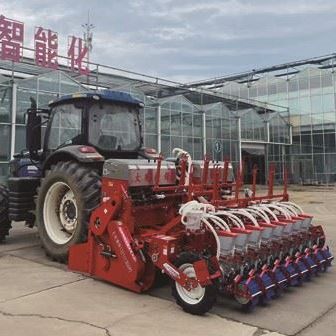
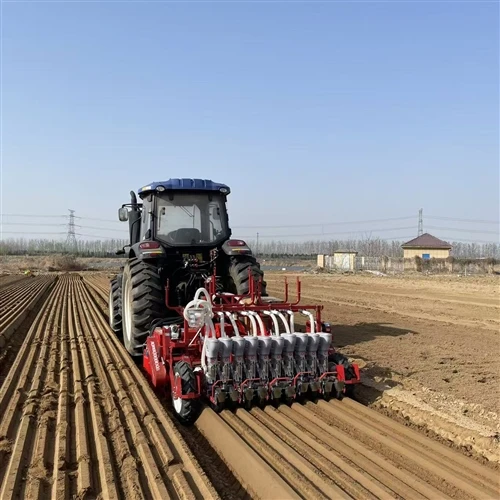
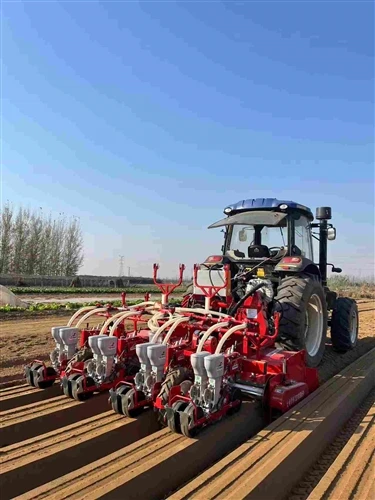
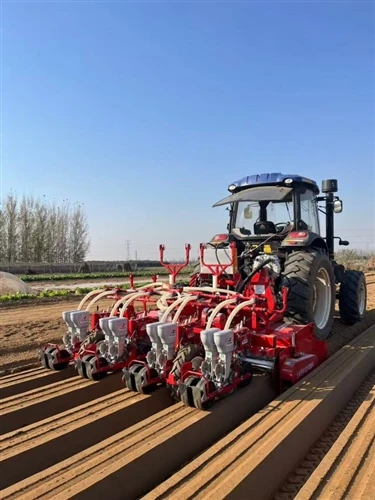
A pneumatic precision seeder operates on a completely different principle. It utilizes a vacuum suction system to singulate seeds from the hopper. As a specially designed seed plate rotates at a controlled speed, vacuum pressure securely holds individual seeds against suction holes. When the plate reaches the precise release point above the furrow, the vacuum is cut, and the seed is deposited accurately into the soil.
This process ensures that each seed is placed at a consistent, pre-determined interval, which fundamentally enhances crop establishment.
Advantages of Pneumatic Precision Seeding
Exceptional Placement Accuracy: The vacuum system offers superior control over individual seed pickup and release, dramatically improving in-row spacing accuracy.
Flexible Spacing Adjustment: Operators can easily adjust plant spacing to match specific crop requirements and agronomic practices without changing major components.
Minimized Seed Waste: By placing seeds exactly where they are needed, this method virtually eliminates overlapping and excessive use, maximizing the value of high-quality, often expensive, seeds.
Enhanced Field Efficiency: With multi-row configurations, farmers can cover significantly more acreage in a shorter time, capitalizing on optimal planting windows.
Reduced Labor Dependency: The high degree of automation minimizes the need for manual labor during the critical planting phase, allowing staff to be redeployed to other essential tasks.
Ideal Crop Applications
Pneumatic precision seeders are particularly effective for a wide range of small to medium-sized vegetable seeds. Common applications include:
Onions
Carrots
Radishes
Spinach
Celery
Cabbage
Sugar Beets
For optimal performance, it is crucial to select the appropriate seed plate and machine configuration based on the specific size, shape, and planting requirements of the target crop.
Conclusion
The adoption of pneumatic precision seeding marks a pivotal development in modern vegetable farming. By integrating advanced vacuum technology, adjustable spacing mechanisms, and high-capacity multi-row designs, these seeders offer farmers a more controlled, efficient, and reliable method for establishing healthy, uniform vegetable crops.