

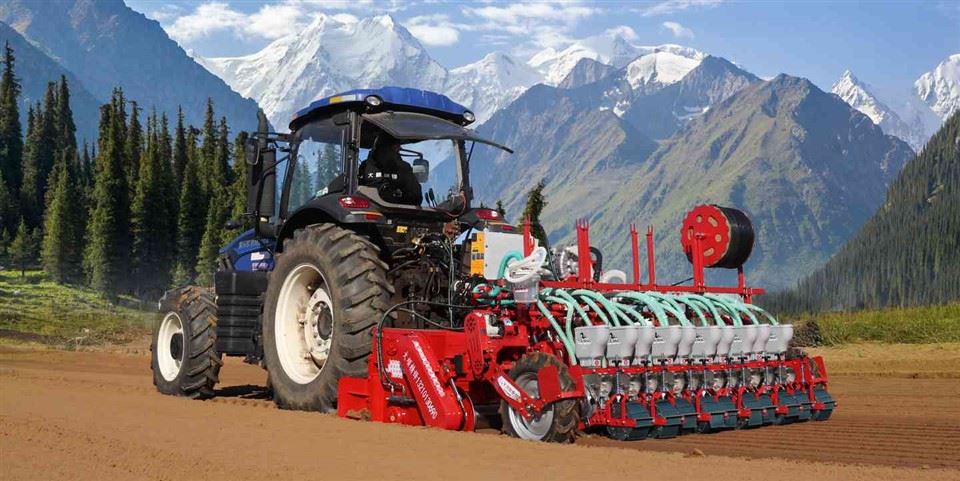
Product Overview
The air suction onion seeder represents a practical response to the challenges modern onion growers face: rising labor costs, tight planting windows, and the constant pressure to deliver more marketable produce from every hectare. This machine replaces traditional sowing methods with a pneumatic system that places individual seeds with consistent accuracy, giving each plant the best possible start.


What sets this seeder apart is its focus on the complete growing cycle, not just the planting pass itself. By establishing uniform spacing and depth from the outset, it creates conditions that carry through to harvest-reducing the need for thinning, minimizing disease pressure through better airflow, and producing bulbs that fall within premium size grades. Growers who have integrated this system into their operations report not just time savings during planting, but measurable improvements in final pack-out rates and per-hectare returns.
The machine is built for growers who view planting as the most critical investment in their season. It delivers on that investment by turning seed into stand with reliability, day after day, across variable field conditions.
Specifications
| Parameter | Detail |
|---|---|
| Working width | Customize |
| Row spacing | Customize |
| Plant spacing | Adjustable |
| Seeding depth | 0–2cm |
| Required tractor power | 50–200 HP (depending on configuration) |
| PTO speed | 540 RPM |
| Working speed | 4–8 km/h (optimal) |
| Seed types supported | Pelleted and raw onion seed |


Product Details
Pneumatic Seeding System
At the heart of this seeder is a pneumatic seeding mechanism that uses a rotating seeding disc and a controlled airflow to pick up, hold, and release individual seeds. The seeding disc is equipped with precision-machined holes sized to match onion seeds; as the disc rotates past the seed hopper, a vacuum draws individual seeds into each hole. Subsequently, a mechanical knock-off mechanism or a pressure-release zone dispenses the seeds into the seed furrows at precise, predetermined intervals.

Drive and Ground Engagement
A ground-driven land wheel powers the entire metering system, ensuring that seeding rate remains synchronized with actual forward travel. This eliminates the variability that can occur with PTO-only drives when tractor speed fluctuates. A chain-and-sprocket transmission transfers motion from the land wheel to the seed discs, with easy-to-access tensioners and shielded components that resist debris buildup.
Frame and Hitch
The seeder rides on a welded steel frame with a three-point hitch (Category II) that provides stable attachment and easy lift for transport or turning. The frame is designed with sufficient ground clearance to navigate residue and moderate contours without clogging. Transport wheels are included on wider models, allowing the seeder to be folded or lifted for road movement without removing row units.
Key Features
Single-Seed Precision That Eliminates Skips and Doubles
The vacuum metering system consistently selects exactly one seed per metering point, addressing the two most common problems in mechanical planters: gaps where no seed drops, and doubles where two seeds compete for the same space. Both issues reduce yield potential; gaps waste productive area, while doubles force plants to compete, often resulting in two undersized bulbs instead of one marketable onion. By eliminating these errors, the seeder ensures that every available centimeter of field contributes to the final crop.
Uniform Plant Spacing for Balanced Canopy Development
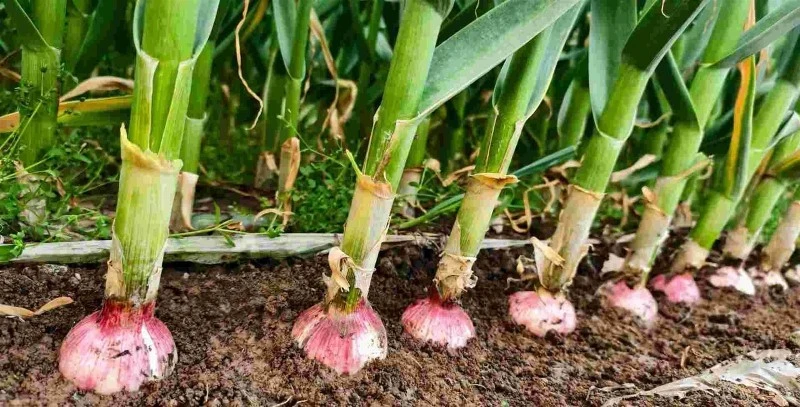
Accurate, repeatable distances between seeds mean that each onion plant has adequate room to develop a full root system and foliage canopy without shading or crowding neighbors. This spatial consistency translates directly to more efficient photosynthesis and nutrient uptake across the entire field. Growers see the results in even crop maturity, which simplifies harvest timing and reduces the proportion of bulbs that fall outside target size ranges.


Air System Designed for Field Conditions
The pneumatic circuit includes a heavy-duty fan driven by the tractor PTO, delivering consistent vacuum regardless of engine speed fluctuations. An integrated filter traps dust and debris before they reach the metering heads, protecting the system from contamination that can cause misses. The air supply manifold distributes vacuum evenly to all row units, ensuring that each metering disc receives identical pressure-so the outer rows plant just as accurately as the center rows.
Suitable Applications
Large-Scale Commercial Onion Production
For operations managing hundreds of hectares, the seeder delivers the combination of speed and accuracy needed to complete planting within the optimal window. The machine covers ground quickly while maintaining the precision that prevents costly replanting. Its durability and low maintenance requirements suit the long hours and demanding schedules of commercial-scale farming, where equipment reliability is non-negotiable.
Agricultural Cooperatives and Shared Equipment Programs
Cooperatives serving multiple member farms benefit from the seeder's adaptability. Different growers can configure the machine for their specific field conditions, seed varieties, and preferred row layouts without requiring specialized training or tools. Shared ownership spreads the capital cost across a broader base, making high-precision planting accessible to operations that might not justify a dedicated machine of their own. The seeder's straightforward operation and robust construction also mean that multiple operators can use it effectively with minimal transition time.

Mechanized Vegetable Production Systems
As vegetable farms move toward fully mechanized workflows, this seeder integrates naturally with complementary equipment. It works alongside bed formers, fertilizer applicators, and later-stage harvesters to create a seamless production line. The precision seeding establishes a uniform crop that is easier to manage with mechanized cultivation and harvesting equipment, reducing the bottlenecks that occur when manual intervention is required at multiple points in the growing cycle.
Specialty and Export-Grade Onion Production
Growers targeting premium markets-whether for fresh retail, processing, or export-face stringent quality requirements that reward uniformity. The seeder's ability to produce consistent bulb size and maturity helps meet these standards without the need for extensive grading and culling. This is particularly valuable for export programs that specify narrow size ranges and require clean, disease-free bulbs with good storage characteristics.
Quality Assurance
Factory Testing and Calibration
Every seeder undergoes a comprehensive factory test before shipment. This includes bench testing of each metering unit to verify seed pickup consistency across a range of disc speeds and vacuum pressures. The transmission is run through its full speed range to check for smooth operation and correct synchronization between the land wheel and seed discs. Alignment of the row units is verified against the tool bar to ensure parallel operation across the working width.
Materials and Manufacturing Standards
The frame uses high-strength steel with a multi-stage anti-corrosion treatment: sandblasting to remove mill scale, followed by an epoxy primer and a topcoat that resists abrasion and chemical exposure. All bearings are sealed and pre-lubricated for the expected service interval. Seed discs are precision-machined from wear-resistant material, with hole sizes and patterns that match onion seed characteristics. Fasteners are grade 8.8 or higher, with locking elements to prevent loosening under vibration.


Component Traceability
Critical components-including gearboxes, bearings, and pneumatic valves-are sourced from established suppliers with documented quality control processes. Each machine is assigned a serial number that links to production records, allowing for accurate tracking of any future service needs or updates. The factory maintains documentation on all component suppliers and batch numbers for traceability purposes.
Field Validation
Prior to full production, prototype units were tested on working farms across different soil types and onion-growing regions. This field validation informed design refinements in areas such as furrow closure, depth control, and debris management. The production model incorporates those learnings, with particular attention to the conditions that vary most across growing areas-soil moisture, residue levels, and typical planting speeds.


Packaging & Global Logistics
Packaging for International Shipment
Each seeder is prepared for export with attention to the rigors of ocean freight and inland transport. The main frame is secured to a heavy-duty steel skid base that allows for forklift handling and provides stable support during container loading. Row units and subassemblies are individually wrapped in protective film, with vulnerable components-such as metering discs and depth gauge wheels-packed in separate crates to prevent impact damage. All exposed metal surfaces receive a rust-preventive oil coating before wrapping, and desiccant packs are included in sealed crates to control humidity during transit.
Container Loading and Shipping Arrangements
The factory coordinates with freight forwarders experienced in agricultural machinery logistics. Depending on the seeder configuration, units are loaded into standard 20-foot or 40-foot high-cube containers. The packaging design maximizes container utilization while ensuring that weight distribution does not exceed axle or floor loading limits. For destinations with port restrictions or limited inland transport infrastructure, the factory can arrange for break-bulk or flat-rack shipping to accommodate oversized components.

Documentation and Compliance
Each shipment includes complete documentation required for customs clearance: commercial invoices, packing lists, bills of lading, and certificates of origin. The factory provides country-specific conformity documents where applicable, including CE compliance for European markets and relevant safety certifications for other regions. This documentation is prepared in advance of shipment, minimizing delays at destination ports.
Delivery Timeline
Standard production lead time is 10–20 days from order confirmation, depending on configuration complexity. Air freight options are available for urgent orders, though most customers find sea freight to be the most cost-effective balance of speed and expense. The factory provides shipping updates and tracking information throughout the transit process, with estimated arrival dates communicated well in advance to help growers plan their planting schedules.
After-Sales Service and Support
Technical Support
The factory provides technical support via phone, email, and remote video consultation. Support staff are available during normal business hours in major time zones, with a response target of 24 hours for standard inquiries and 4 hours for urgent operational issues. Common support requests include calibration assistance, troubleshooting air system performance issues, and guidance on seasonal maintenance.

Warranty Coverage
This seeder is covered by a 12-month manufacturer's warranty from the date of delivery, covering manufacturing defects in materials and workmanship. The warranty includes replacement parts for failures that meet warranty criteria; however, labor costs and shipping costs for warranty parts are the customer's responsibility. An extended warranty service is available for operations requiring additional protection. Warranty rights are transferable to subsequent owners within the original warranty period, thereby safeguarding the equipment's resale value.
FAQ
Q: What types of onion seed can this seeder handle-pelleted, raw, or both?
The seeder is designed to work with both pelleted and raw onion seed. The key is selecting the appropriate seed disc for the seed type and size; pelleted seed requires larger holes and slightly different vacuum settings, while raw seed calls for finer disc holes and careful pressure adjustment. The factory supplies a starter set of discs, and additional discs can be ordered to match specific seed lots. An in-field test is recommended when switching seed types to verify performance.
Q: How long does it typically take to calibrate the seeder for a new field or seed lot?
Calibration is a straightforward process that usually takes 20–30 minutes once the operator is familiar with the machine. The steps involve setting the desired plant spacing by selecting the correct drive sprocket, adjusting vacuum pressure with the tractor-mounted regulator, and running a short test pass to check seed placement. Fine adjustments to depth and press wheel downforce may add another 10–15 minutes depending on soil conditions.
Q: What tractor specifications are required to operate this seeder?
The seeder requires a tractor with a three-point hitch (Category II) and PTO output of 540 RPM. Power requirement ranges from 40 to 90 horsepower depending on the number of row units and field terrain. The tractor should have a standard hydraulic system for lift control; additional hydraulic remotes are not required for basic operation but can be used to control optional features such as marker arms.
Q: How does the seeder perform in wet or sticky soil conditions?
The seeder is designed to handle a range of soil moisture levels, but performance in wet conditions depends on soil type and the specific setup. The double-disc openers and gauge wheels are effective in most moist soils, provided that the press wheels are not overloaded with mud. In sticky clay soils that tend to build up on discs and wheels, the seeder includes scraper blades that help maintain clean running surfaces. For extremely wet conditions, operators may choose to reduce ground speed and adjust press wheel downforce to prevent smearing of the furrow sides.
Q: What is the expected lifespan of the seed discs, and how often should they be replaced?
Seed disc lifespan varies with seed type, field conditions, and total planted area. With pelleted seed and moderate field conditions, discs typically last 80–120 hectares before showing wear that affects pickup consistency. Raw seed is more abrasive and may reduce disc life to 50–70 hectares. Regular inspection is the best guide-if the disc shows visible rounding of the hole edges or inconsistent pickup in testing, replacement is due. The factory recommends keeping spare discs on hand to avoid delays during the busy planting season.
Hot Tags: Air Suction Onion Seeder, China Air Suction Onion Seeder manufacturers, suppliers, factory, pneumatic onion planter, onion planter, 12 Row Pneumatic Onion Seeder, manual onion seeder, 3 Row Pneumatic Onion Seeder, 6 Row Pneumatic Onion Planter


