What Farmers Should Know Before Choosing a Precision Vegetable Seeder
Choosing a vegetable seeder is not simply about finding the machine with the highest working speed. Different crops, seed sizes, soil conditions and planting methods all require different machine settings.
For farmers planning large-scale vegetable production, understanding a few basic points before purchasing a pneumatic precision seeder can help avoid many problems during the planting season.
1. Start With the Crop
The first thing to consider is the crop you plan to plant.
Carrots, onions, spinach, celery and sugar beets have different seed characteristics. Some seeds are small and irregular, while others are more uniform in shape.

A seeder designed for one crop may not automatically provide the best performance for another crop.
For this reason, the seed metering system and seed plate should match the crop being planted.
2. Seed Size Matters
Seed size is closely related to precision planting.
In a pneumatic seeder, the vacuum system works together with the holes on the seed plate to pick up seeds. If the hole size does not match the seed properly, the machine may pick up more than one seed or fail to pick up a seed.
Before ordering a machine, farmers should provide information about the seed variety and, when possible, actual seed samples.
This allows the manufacturer to recommend a more suitable seed plate.
3. Plant Spacing Should Match the Crop
There is no single plant spacing that works for every vegetable.
For example, carrots may require a different planting density from onions or leafy vegetables. The final spacing should be considered together with the variety, cultivation method and expected plant size.
A good precision planter should allow farmers to adjust the plant spacing according to their production plan.
4. Consider the Soil Condition
Soil preparation has a direct influence on seeding quality.
Before operating an air suction vegetable seeder, the field should generally have suitable soil structure and moisture conditions. Excessively hard soil, large clods or uneven ground can affect furrow opening and seed placement.
For this reason, precision seeding should be considered as part of the entire field preparation process rather than as a separate operation.

5. Seeding Depth Is Important
Small vegetable seeds normally require careful control of planting depth.
If seeds are placed too deep, emergence can become more difficult. If they are too shallow, they may be more exposed to drying conditions.
The appropriate depth depends on the crop, seed size, soil type and moisture.
A seeder with adjustable seeding depth gives farmers greater flexibility when field conditions change.
6. Row Configuration Depends on the Farm
Different farms have different planting systems.
Some growers use flat-ground planting, while others use raised beds or ridges. The number of rows and row spacing can also vary considerably.

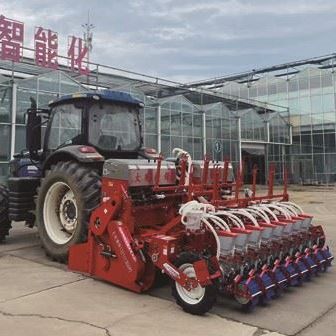
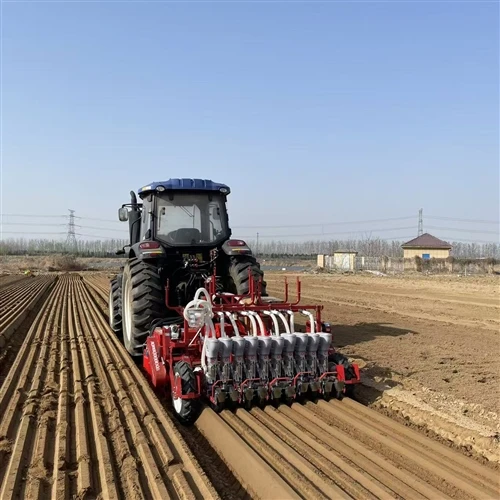
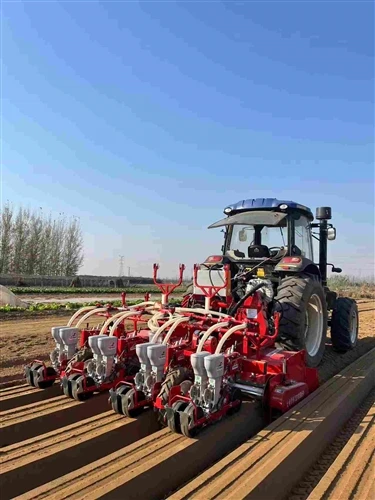
A pneumatic vegetable planter can be configured with different row numbers and spacing options to suit different farming systems.
When choosing a machine, farmers should consider not only the number of rows but also whether the complete configuration matches their existing field equipment.
7. Tractor Compatibility Should Not Be Overlooked
The tractor is another important factor.
The required tractor horsepower depends on the seeder configuration, working width, soil condition and additional equipment.
A wider machine or a configuration that combines operations such as rotary tillage, ridge forming or fertilizer application may require more tractor power.
Checking tractor compatibility before purchasing can help prevent unnecessary problems in the field.
8. Precision Seeding Is More Than Seed Placement
Many people think that a precision seeder is simply a machine that drops seeds at equal distances.
In reality, planting quality depends on several factors working together:
Seed quality + seed plate + vacuum pressure + planting depth + soil condition + machine speed
If one of these factors is not properly adjusted, the final planting result may be affected.
That is why proper machine setup and operator training are important parts of precision farming.

9. Regular Maintenance Helps Keep Performance Stable
Like other agricultural machines, a pneumatic seeder needs regular inspection.
Before the planting season, farmers should check the vacuum system, seed plates, hoses, bearings and transmission components.
The seed metering unit should also be kept clean. Dust and debris can affect the suction holes and reduce seed pickup performance.
A few simple maintenance steps before entering the field can save valuable time during the busy planting season.
10. Choose Equipment Based on Real Farm Conditions
There is no universal "best" vegetable seeder.
The right machine depends on the crop, seed characteristics, field size, planting method, tractor and local soil conditions.
For commercial growers, it is often better to discuss these details with the manufacturer before making a purchase.
Final Thoughts

Precision planting is becoming increasingly important as vegetable farms look for better efficiency and more consistent crop establishment.
A pneumatic precision seeder can provide accurate seed placement and flexible planting configurations, but good results still depend on proper machine selection, field preparation and operation.
Before choosing a seeder, focus on the actual requirements of your farm rather than simply comparing machine specifications.
The right seeder is not necessarily the biggest or fastest machine. It is the one that matches your crop and your field.
TASNG - Precision Seeding Solutions for Modern Agriculture