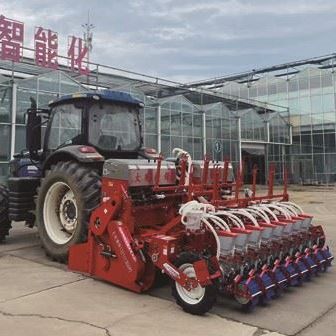
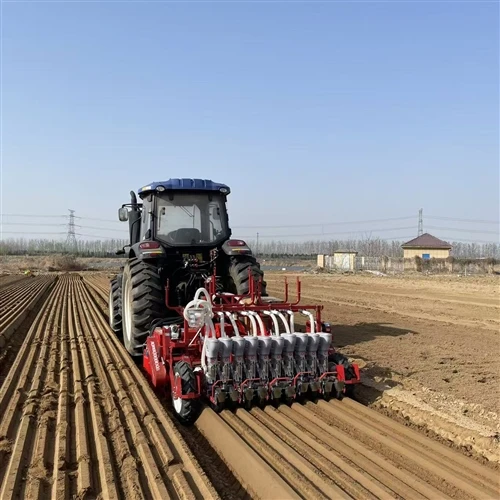
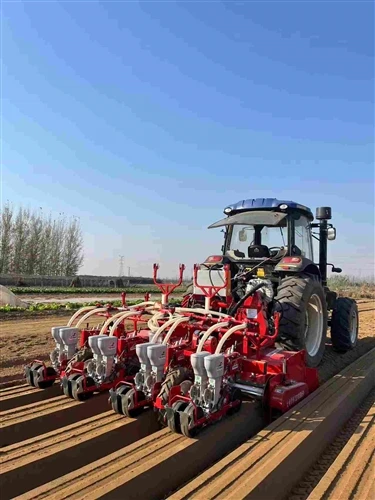
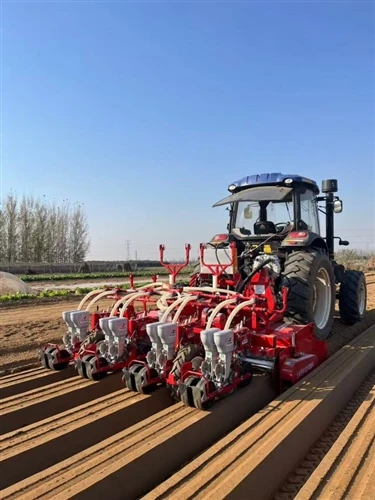
Air-suction vegetable seeders represent a significant advancement in precision agriculture, utilizing pneumatic principles to achieve singulation of small and irregularly shaped seeds that mechanical metering systems often cannot handle effectively. Unlike traditional mechanical seeders that rely on physical contact and size-based sorting, air-suction systems use controlled airflow to pick and place individual seeds with remarkable accuracy, making them particularly valuable for high-value vegetable crops where precision directly affects yield and profitability.

The core mechanism relies on a combination of negative and positive air pressure. A vacuum pump creates negative pressure within a seed meter, causing seeds to be captured on the surface of a rotating seeding disc at precisely sized holes. As the disc rotates, a seed-clearing device removes excess seeds, ensuring each hole retains only a single seed. The seed is then transported to a discharge zone where positive pressure or zero-pressure conditions release it into the seed tube, allowing gravity to guide it into the furrow prepared by the opener. This continuous cycle enables high-speed operation without compromising placement accuracy.


The advantages of this technology are particularly relevant for vegetable production. Vegetables such as carrot, cabbage, tomato, and pepper have seeds that are either small, irregular, or expensive, making precision essential to reduce thinning labor and seed waste. Studies have demonstrated that air-suction systems can achieve single-seed rates between 90.1% and 98.5%, with miss rates as low as 0.9% to 1.8%. Research on irregular-shaped seeds like tomato and pepper has optimized parameters such as suction pressure, clearing pressure, and vibration frequency, with optimal combinations yielding a qualified rate of 96.9%. The technology also minimizes mechanical damage to seeds during the metering process, a critical consideration for germination rates. Furthermore, the gentle handling of seeds reduces the risk of cracking or abrasion that commonly occurs in mechanical metering systems.

Modern designs incorporate additional features such as modular construction for adaptability, electronic monitoring systems for real-time fault detection, and even remote-controlled operation. The primary limitations include a requirement for clean, well-sorted seed and higher manufacturing complexity compared to mechanical seeders. Nonetheless, for high-value vegetable crops where precision directly impacts profitability, air-suction seeders have become an indispensable tool in the modern agricultural toolkit.